
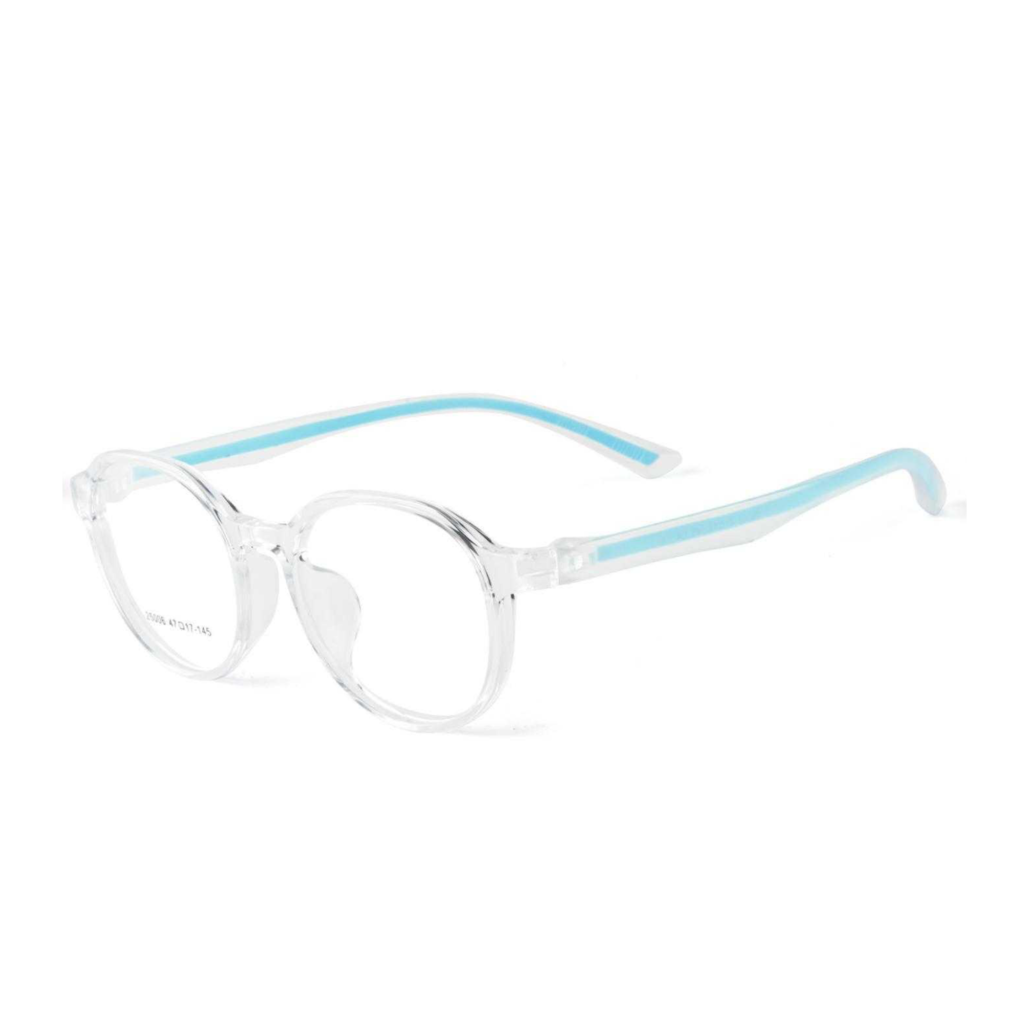
If you sell eyewear into humid, coastal, or tropical markets, you have probably met the complaint already: green residue around the temples, a hinge that stiffens after a single summer, and a customer convinced their glasses have started to rust. The frame is usually the innocent party. Screwless TR90 frames solve the problem by removing the metal hinge that causes it — and that changes what your store has to warranty, replace, and explain.
Over the past decade of manufacturing frames for optical retailers worldwide, we have seen the same pattern repeat. Corrosion complaints rarely trace back to the frame material; they trace back to one small, hidden component. Once you understand it, avoiding it becomes straightforward.
Here is the fact most buyers never hear clearly: TR90 frames do not rust. TR90 is an engineering-grade nylon polymer, and its molecular structure cannot react with oxygen and moisture the way metal does. What actually corrodes is the metal component hidden inside the frame: the hinge, the screws, or the metal inserts used to reinforce stress points. When a customer says their TR90 glasses rusted, they are describing metal corrosion inside a plastic frame.
That distinction matters commercially, because it turns a vague material worry into a specific failure point you can engineer out.
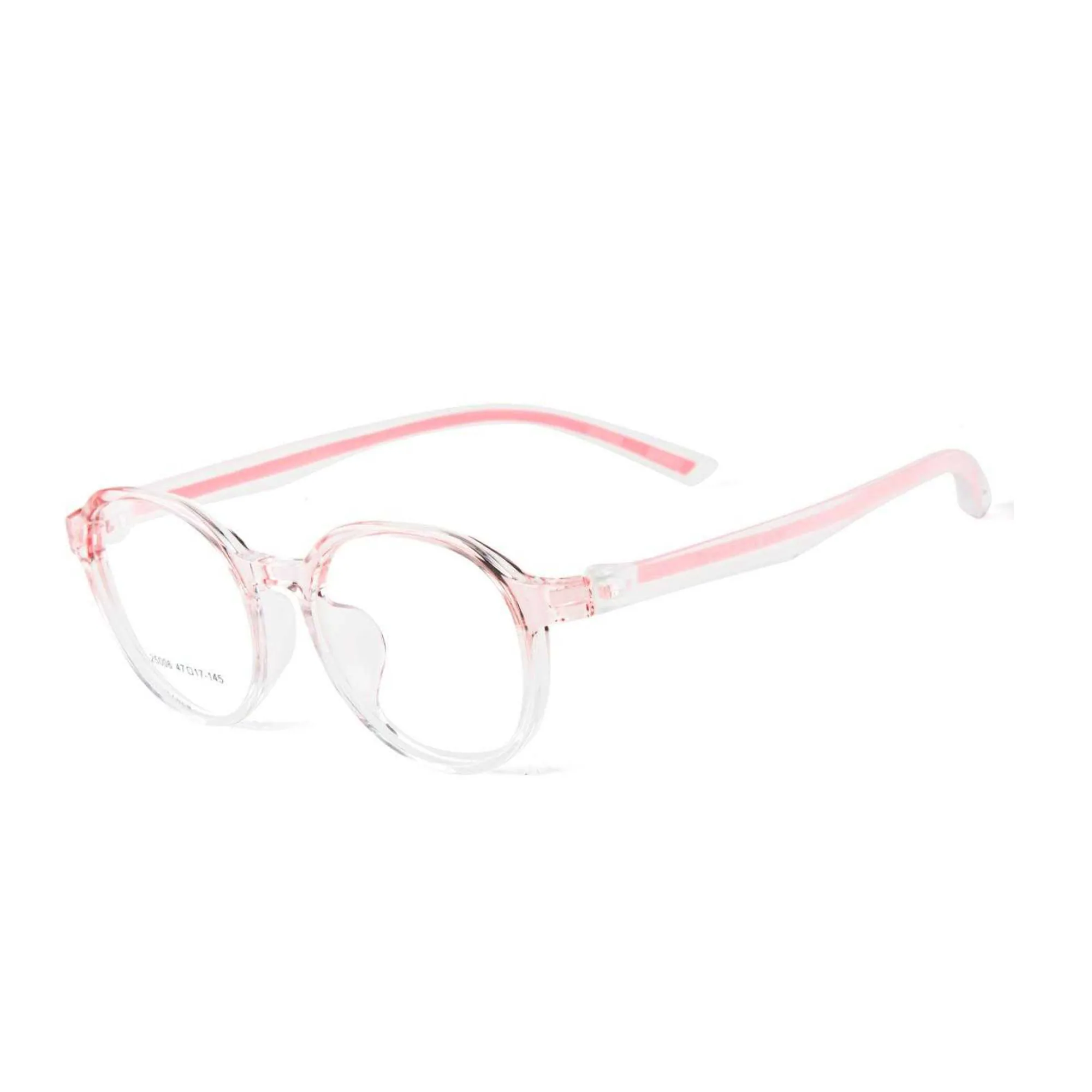
Almost every conventional pair of glasses connects its temples with a metal hinge held together by tiny screws or pins. Those small fasteners are the most corrosion-prone parts of any frame, and three forces attack them at once.
The uncomfortable truth: the first visible symptom is cosmetic, but the eventual outcome is mechanical — pitting, plating peel, and a hinge that no longer moves smoothly.
This is where a screwless design changes the equation completely. In a screwless TR90 frame, the temple-to-front connection uses an integrated or snap-fit polymer hinge. There is no metal screw, no metal pin, and no metal insert at the joint. Because rust requires metal, and the hinge contains no metal, there is nothing to rust.
Think of it as removing the target instead of defending it. Conventional frames try to protect a metal hinge with plating that eventually wears, chips, or peels. A screwless TR90 frame eliminates the metal component altogether — and the difference shows up directly in fewer returns.
| Feature | Traditional metal hinge | Screwless TR90 hinge |
|---|---|---|
| Hinge material | Brass or nickel-silver alloy plus steel screws | Molded TR90 polymer |
| Rust risk | Yes — in sweat, humidity, and salt air | None — polymer cannot rust |
| Green verdigris stains | Common at nose pads and joints | Eliminated |
| Skin irritation | Possible from copper and nickel release | No metal contact at the joint |
| Long-term integrity | Loosens as plating peels | No fasteners to loosen |
Rust is not the only problem a metal fastener brings. It also brings the second most common eyewear failure: loosening. Screws are a moving connection, so every time a customer opens and closes their glasses, the screw absorbs force. Over months it backs out, strips its threads, or falls out completely.
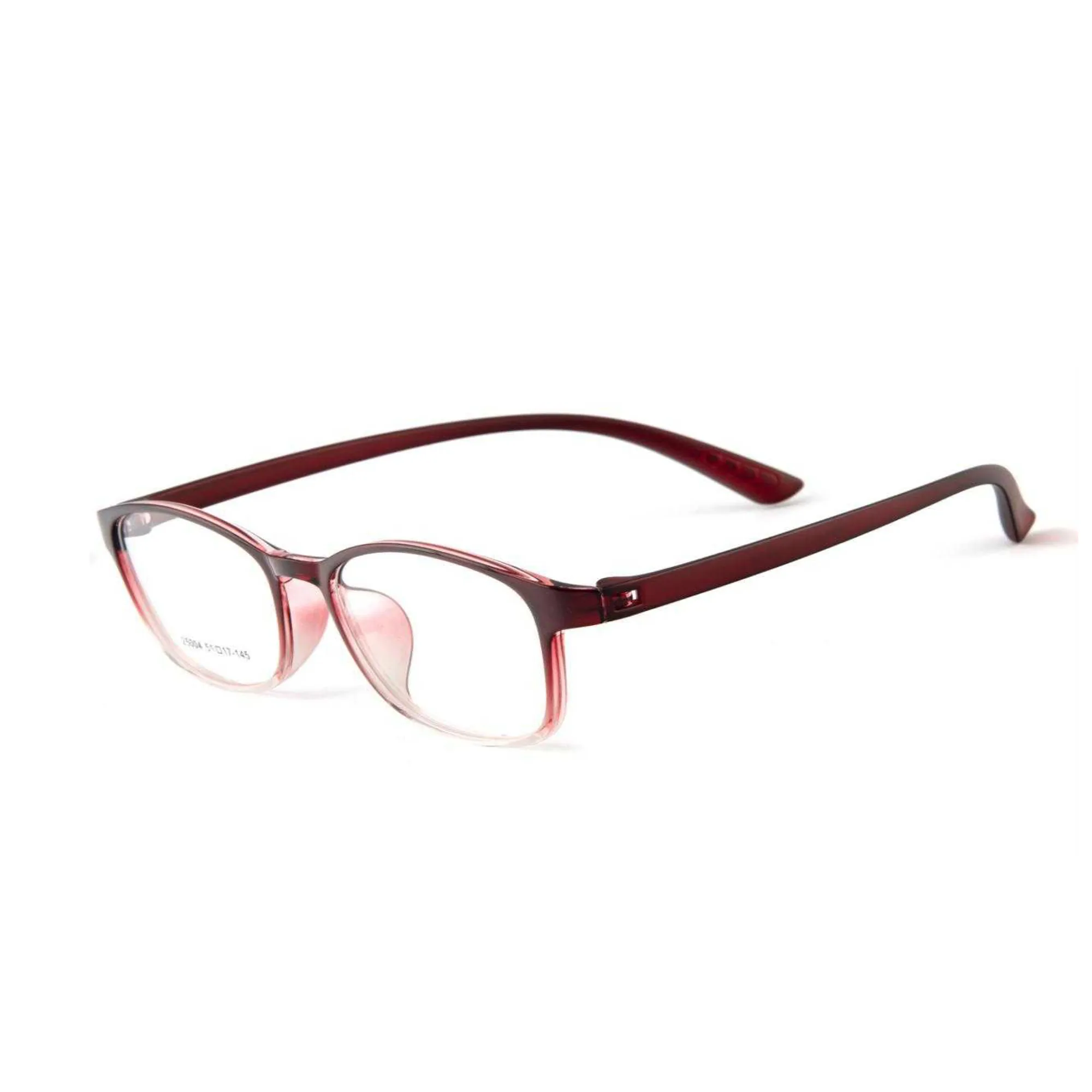
With a screwless TR90 hinge, there is nothing to tighten, no screw hole to strip, and no periodic re-tensioning. The frame simply behaves the way a shape-memory polymer should: it flexes and returns, without stressing a rigid metal joint.
The failure patterns are well documented across the eyewear industry, and they point in one direction.
Read together, the data says the metal hinge is the weak link — and rust is how that weakness announces itself. A screwless TR90 frame removes the weak link entirely.
The advantages are universal, but they are decisive in a few specific situations.
Not every claim of “screwless” or “TR90” is equal, so verify before you buy. Ask a supplier whether the joint is genuinely metal-free or a screwless design that still hides a metal pin; request material datasheets for TR90 rather than generic memory plastic; and ask for salt-spray and hinge-cycle testing data. Reputable factories test frames against recognised industry standards, and premium suppliers test plating for 48 to 72 hours against sweat and salt. If you are sourcing for a humid climate, that single question separates a genuine rust-proof frame from a marketing claim.
To compare options directly, browse our wholesale eyewear catalog, or read our guide to low-MOQ custom eyewear for independent retailers. For broader market context, industry bodies such as The Vision Council publish useful eyewear research.
No. TR90 is an engineering polymer and cannot rust. Corrosion complaints on TR90 frames come from the metal hinge or screws, which a screwless design removes.
For everyday and active use, yes. Modern TR90 snap-fit hinges are engineered for high cycle counts, and unlike metal hinges they have no screws to loosen.
They are ideal. With no metal at the hinge, there is nothing for humidity, sweat, or salt air to corrode.
Yes. TR90 suits OEM and private-label production, and screwless hinge assemblies can be specified across a range of frame styles.
Rust is not a mystery. It is the predictable result of metal fasteners meeting sweat, humidity, and salt. Every conventional hinge carries that vulnerability; a screwless TR90 frame removes it entirely, because there is no metal to corrode and no screw to loosen.
For eyewear retailers and distributors, that translates into fewer returns, fewer complaints, and a stronger reputation for quality. If you are sourcing for a humid or coastal market, request a sample kit and see the difference for yourself.
 Eyewear Retail Insights
 Eyewear Retail Insights
 Eyewear Retail Insights